



Permanent Water Saving Rules
These have been in place since 2011, helping us all manage water efficiently around the home, garden and in business.
On this page
Our water is precious
Water is one of our most precious resources, essential for life.
Permanent Water Saving Rules are in place across the state every day of the year. These simple, common-sense rules help us all use drinking water wisely to reduce waste and ensure we’re doing our part to safeguard it for generations to come.
While most people do the right thing, it’s important to know that breaking the rules can lead to penalties.
These rules apply only to drinking water — not recycled water, greywater, rainwater or bore water.
Permanent Water Savings Rules
Here’s a summary of the rules. For a copy of the Permanent Water Savings Plan check the document section below.
Hoses
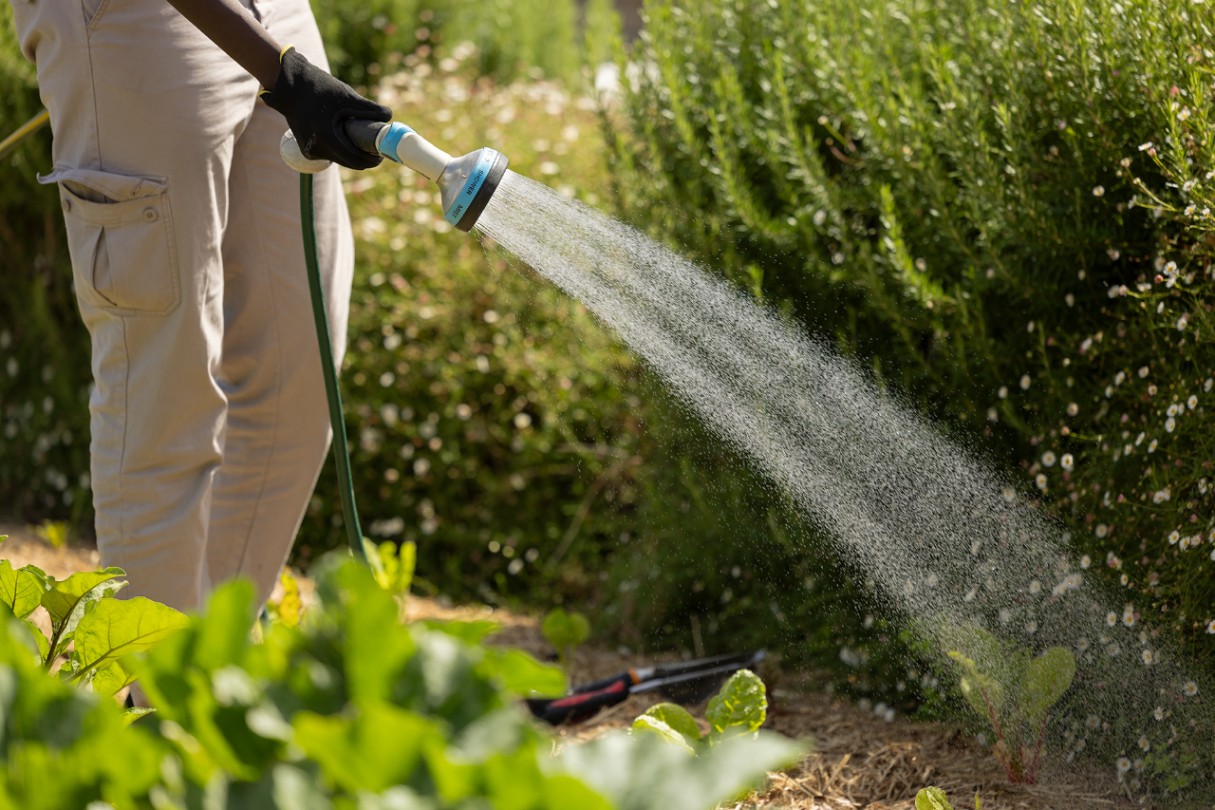
Hoses must always be leak free and fitted with trigger nozzles.
Trigger nozzles ensure less water is wasted.
Garden watering
Watering systems for home and commercial gardens can only be used between 6pm and 10am to avoid the hottest part of the day and evaporation.
You can water gardens at any time using a hand-held hose, watering can or bucket.
Hard surfaces
Water must not be used to clean hard surfaces such as concrete, paths and driveways. Swap to a broom instead.
Exemptions apply if cleaning is needed due to a hazard, surface staining or during construction. See FAQs for more information.
Other rules
Green spaces
Public Green Spaces can only be watered:
- using watering systems between 6pm and 10am and only if these systems are fitted with rain or soil moisture sensors. This avoids the hottest part of the day when water wastage occurs due to evaporation and ensures that we don’t water when it’s not needed.
OR
- in accordance with an approved Water Use Plan . They can, however, be watered anytime using a hand-held hose , watering can or bucket.
Water features
All fountains and other water features must recirculate water.
Pools and spas
You can fill or top up pools and spas
Vehicle washing
You can wash your car, boat or other vehicles at home using a high-pressure cleaning unit, a hand-held hose fitted with a trigger nozzle or a bucket at any time.
Window washing
You can wash windows with a bucket, a high-pressure cleaning unit or a hand-held hose fitted with a trigger nozzle at any time.
Note: Permanent water saving rules don't apply when you're using recycled, reclaimed, rain or grey water, or when water is needed for human and animal health, firefighting or the safety of vehicles and equipment.
Automatic exemptions - no application required.
You don't need to apply for exemptions for these activities:
during or immediately after applying fertilisers
testing irrigation systems for existing gardens and lawns
for occupational health and safety purposes (e.g. to limit dust) as a result of construction/reconstruction/renovation activities, motocross, equestrian or similar events.
Exemptions available by application.
In special limited circumstances, you can apply for an exemption to the Permanent Water Saving Rules.
If water restriction levels change after you’ve got an exemption, you’ll need to apply again.
Some exemptions also require a Water Use Plan. These help to manage the use of water for specific purposes.
As the rules do restrict water use, they can be considered a basic form of restrictions, and – like restrictions – are enforceable under law. However, unlike staged (numbered) water restrictions, the water saving rules are permanent and don’t have an end date. The permanent water saving rules are in place to help conserve our water supply into the future
A high-pressure water cleaner is an electric or petrol-powered device that connects to a hose, forcing water out at high pressure for more eƯective cleaning. The rate of delivery must be 9 litres per minute or less.
A watering system is any automatic or manually operated system of sprinklers, drip hoses, weep hoses, etc. Even a simple garden sprinkler connected to a tap is considered a watering system.
The most efficient and effective watering system is a sub-surface drip hose, connected to a timer to water overnight. This ensures plants get water near their roots, and minimises water loss to evaporation
It’s more eƯicient and eƯective to water your garden when the sun goes down. Lower evaporation means water is more likely to get to plant roots.
Water can only be used to clean hard surfaces (including, driveways, paths, concrete, tiles, timber decking) when:
- where cleaning is required as a result of an accident, fire, health hazard, safety hazard or other emergency; or
- if staining to the surface has developed and then only once a season; or in the course of construction or renovation,
and then only by means of
- a high pressure water cleaning device;
- or if such a device is not available, a hand-held hose or a bucket
Breaching the Permanent Water Saving Rules can result in fines. For a first offence you can be fined over 10 penalty units and for a subsequent offence over 20 penalty units
Permanent water saving rules are enforced under the Water Act (1989). If you witness a breach of the rules, please contact us with details of the offence. An authorised water officer will investigate and report. official warnings and on-the-spot fines can be issued for offences, and in severe cases, prosecution may be sought.
Applications for exemptions can be made from residential customers, on behalf of a business, company, industry or commercial or industrial organisation; or on behalf of a council, public or private school, a sportsground, a public garden or a tennis club.
Apply though an application form. We’ll consider it and will either grant approval (subject to any appropriate conditions) or deny the exemption.
A Water Use Plan outlines the measures that are already being used or that are planned on being used to assist in saving water. It controls the use of water for specific purposes or for a specific stage of restrictions. It helps to maximise water-savings during restrictions.
We must approve a Water Use Plan before considering an exemption to some of the Permanent Water Saving Rules